
Harvia M3 Wood-Burning Sauna Stove Review: Real-World Experience in Portugal
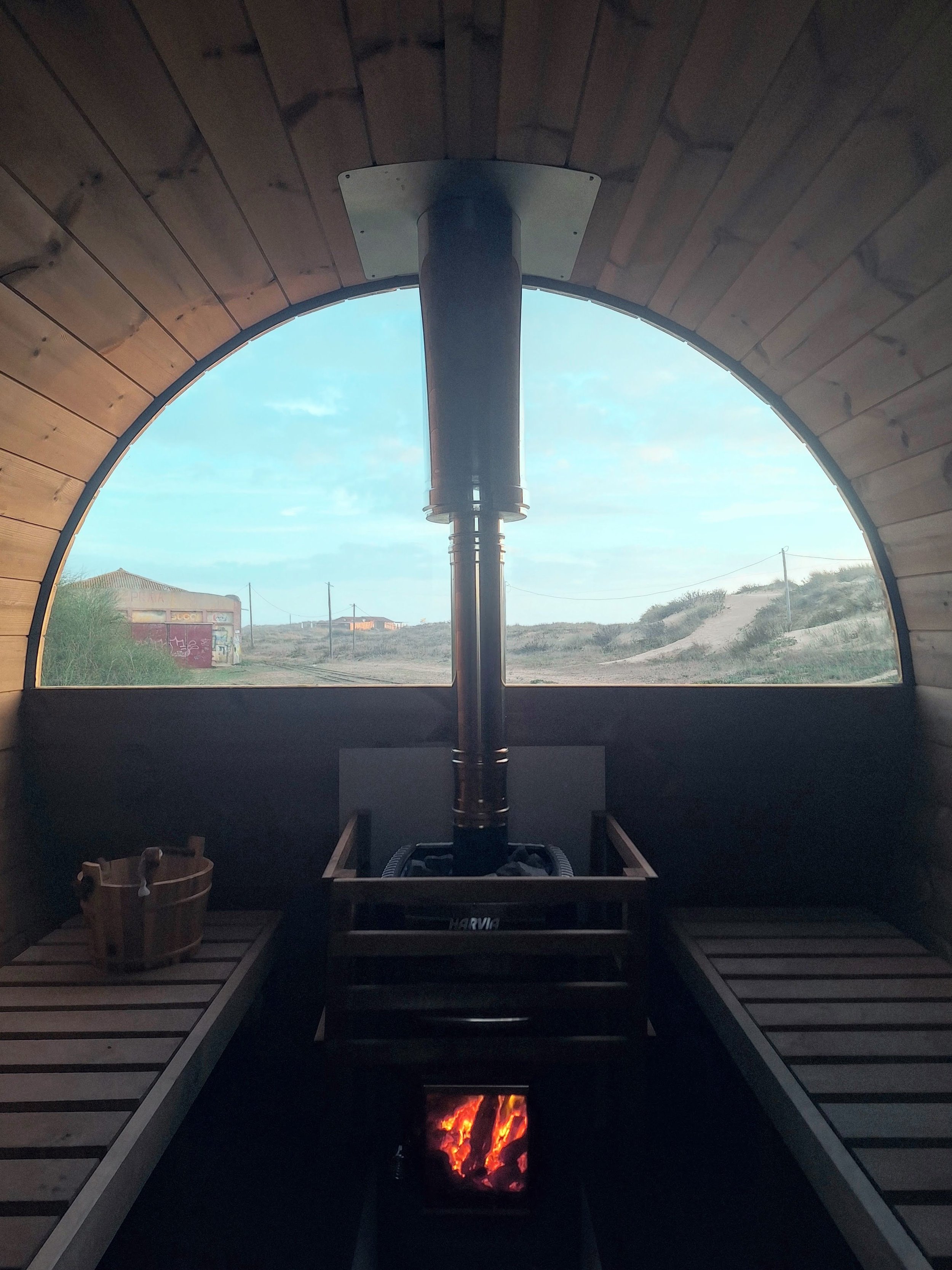
Choosing a heater for a sauna can be a daunting task, when we built our mobile sauna we spent hours pouring over the specifications sheets of a variety of heaters. Sauna volume, amount of glass, heat up time, wood vs electric; sometimes it feels like there are more questions than answers.
I wanted to write something in detail to help both our clients in purchasing a sauna and any other sauna fans who may find this interesting. As a note, we use the Harvia M3 as the heater in our mobile sauna, we’ve had it for several months now going up and down the country for festivals and private events. This review is based on that experience and will be useful for anyone considering buying a sauna in Portugal.
Why We Chose the Harvia M3 for a Wood-Fired Sauna
Our consideration of choosing a wood-burning heater vs an electric powered heater was because we wanted the most flexibility with where we could locate the sauna. The clue with a mobile sauna is really in the name, it has to be mobile. Choosing wood means we can be completely independent from the electricity supply when we take the sauna on the road.
Choosing a Harvia then became a bit of a no-brainer. We wanted something from a Finnish brand that was going to be part of the experience we were offering. I had travelled to Finland on various sauna exploration missions, Harvia is the name that appears in every sauna there. From little 2 person cabin saunas, to in-room saunas in your hotel.
A huge consideration for us was simplicity and reliability, as a private hire business we need to be able to teach people how to use the wood burner safely and make sure it doesn’t seem intimidating for them. The Harvia M3 ticks those boxes perfectly, if you can light a small campfire then you can light the sauna.
Harvia M3 Technical Overview (What Actually Matters)
One of our concerns with having a ‘smaller’ sized heater was whether it could handle a quick heat up time from a cold start and the overall power output. In reality this hasn’t been an issue at all. With a 16kW output the Harvia M3 has easily enough power output when fully burning or when the logs have burned down to embers. In fact this output is far more than most people will ever achieve with an electric heater unless they make some major upgrades to their electricity supply.
The key consideration when working out the power output for your sauna is the internal sauna volume, essentially what size of room are you trying to heat up. Our mobile barrel sauna has an internal volume of approx 7.3m3, we find that with the Harvia M3 we get a complete heat though the sauna. There are no cold patches in the lower areas by your feet and the heat difference between the front and back of the room is not too noticeable.
Installation Experience in Portugal
In terms of installation for the heater the Harvia M3 didn’t present any major challenges. It is a large heavy oven and so manoeuvring it into the correct location can be a problem, the stones are packed separately, which is a relief as it makes the heater less cumbersome.
We were able to route the chimney through the roof, using a special insulated pipe to pass through the wood. It is surprising how much heat insulation can be provided within the chimney system as even during use the chimney is rarely too hot to touch.
One thing to watch out for with builds is the clearance requirements for the chimney. You want a decent height from the roof to avoid directing smoke straight back onto the roof surface. Although something too tall will look a bit silly, there is a balance to be struck.
Heat-Up Time and Fire Management
Heat up time and fire management are the 2 questions that we get the most from sauna buyers and renters.
Portugal benefits from quite a temperate climate, although due to the high humidity it can often feel much colder than the thermometer reads. We have rarely had to heat the sauna from below 10 degrees, which is a big difference in comparison to elsewhere in Europe during the winter.
Our experience is that the sauna powered with a Harvia M3 takes around 35 minutes to reach a usable temperature of 75 degrees. Once you reach that point it is really a matter of preference as to how far you want to go. What we do find is that the heat starts to build very slowly initially, then there is a clear inflection point at which the stones are generating a lot of heat and the temperature starts to shoot up very quickly.
Here are some approx heat up times based on experience:
75°C- 35 minutes
85°C - 45 minutes
95°C - 60 minutes
Maintaining heat at a constant temperature is something that we are always working to get right, that is one of the benefits and the mysteries of a wood burner. It requires a delicate touch and time to really understand how to maintain the temperature and move the needle gradually rather than fluctuating between 70° and 90° with little control.
Steam Quality and Sauna Feel (The Löyly Test)
One of the best things we have noticed after months of use is the quality of the heat and steam that the M3 generates. It's a hard thing to quantify, the exact sensation that means you enjoy the heat vs finding it uncomfortable. Not all heat is made equal, there is a softness to the heat of our trailer sauna that means it is really pleasant to be in. By way of comparison, I think of the sauna in my gym which doesn’t offer nearly the same heat sensation.
A noticeable factor in terms of how pleasant the heat feels is the number of people in the sauna. With a couple of other people it maintains a slight bit more humidity in the air, a natural result of the bodies and breath in the air. When you are alone in the sauna the air dries out very fast, and with less air circulation from people moving and opening the door it can also get very hot very quickly.
Build Quality, Materials and Long-Term Durability
As a primarily rental unit, the build quality and durability was a hugely influential factor for us when we purchased the heater. We always make sure that we clean the steel and glass elements with just a damp cloth after use. Generally the heater has held up well to being used for several hours at a time on a regular basis, as well as being transported around the country on a trailer. Obviously these heaters are designed not to be moved around too much once installed; so we are really putting ours to the test.
The oven and stones area feels solid, as does the glass door which gets a lot of use opening and closing.
We have noticed that there are some small discolouration marks, particularly around the flue pipe to the chimney. Hopefully we can avoid any rusting at all on the heater, but when you are talking about water, heat and time it is always a danger.
The only thing that feels a little lightweight as part of the heater is the ash collection tray. It's not a huge deal as you don't have to worry about removing the ash on a regular basis but compared to the rest of the product it feels a little flimsy and doesn’t always slide in correctly.
Wood Types and Running Costs
A big concern for us when we decided on the wood burning heater was the quality and supply of wood that we could get in Portugal.
As a quick primer on firewood: hardwood burns slower, hotter, and more consistently than softwood. That’s because denser woods have a higher thermal value.
Softwoods are great for getting a fire going as they catch quickly and give you fast flames. But they burn out just as fast. For a sauna, that kind of heat is short-lived and uneven and means constant restocking.
If you want steady temperature, long burn times, and less constant refuelling, hardwood is essential. It’s what gives you that deep, settled heat that holds while you relax.
Here are some of the wood types that are easily accessible in Portugal.
Hardwoods - ideal for long sessions
Carvalho - Portuguese Oak
Azinheira - Holm Oak
Sobreiro - Cork Oak
Oliveira - Olive Wood
Softwoods - good firestarters but not to be used otherwise
Pinho - Pine
Cedro - Cedar
Eucalyptus, whilst very common in Portugal, should generally be avoided. This is due to its high oil content which can damage the oven.
From our experience the sauna is very cost effective to run with good quality, well dried hardwood. Once the fire is going it needs approx 1 log every 20 minutes to maintain the sauna temperature.
Harvia M3 Pros and Cons
Pros
Great quality heat output for a relatively small heater
Wood efficiency is fantastic
Heat sensation is ideal, soft when temperatures are low, not too intense at higher temperatures
Cons
Does quickly show marks of use even with good care
Ash tray feels flimsy
Who the Harvia M3 Is Best For
Household outdoor saunas
The Harvia M3 really shines in outdoor settings. Garden saunas, cabins, and stand-alone builds where ventilation and chimney routing are straightforward. It delivers steady heat without relying on household electrics, and once it’s up to temperature, it holds beautifully.
Off-grid setups
If you’re running a sauna in a remote spot, or anywhere grid power is limited or expensive like much of Portugal, the M3 makes a lot of sense. No heavy electrical upgrades or load calculations, just add wood.
People who enjoy tending a fire
This stove isn’t “set and forget”. You light it, you feed it, you learn how it behaves, start talking to people about the comparative thermal values of oak and olive. For the right person, that’s the whole point. The crackle of the fire, the smell of hot stone. It’s a tactile, hands-on experience that electric heaters simply don’t replicate.